Section · Japanese woodblock prints
Japanese woodblock prints
Ukiyo-e and shin-hanga are among the most common artworks found in homes and estates – and among the most often misjudged. Here is how to tell what you have.
Ukiyo-e, shin-hanga, sōsaku-hanga
Ukiyo-e – «pictures of the floating world» – were the popular prints of the Edo period (1603–1868): actors, beautiful women, landscapes, made in large editions for ordinary buyers. The great names are Utamaro, Hokusai, Hiroshige and Kuniyoshi.
Shin-hanga («new prints», from about 1915) revived the traditional workshop system with modern subjects and moods – Kawase Hasui and Yoshida Hiroshi are the best known. Sōsaku-hanga («creative prints») were designed, carved and printed by the artists themselves.
Original, reprint or reproduction?
Almost every famous Japanese print exists in several versions. Researchers distinguish:
- Original impression: printed during the artist's lifetime from the original blocks.
- Reprint (restrike): printed later from the original blocks, often with fewer colours and on cheaper paper.
- Pirated edition: copied blocks, printed during the artist's lifetime.
- Reproduction: newly carved blocks after an original design – made since the Meiji era (1868–1912) and still today.
- Fake: a reproduction made to deceive, for example with artificial ageing.
On top of that come posters and offset prints, which are not woodblock prints at all.
Common formats
- Ōbanabout 39 × 26 cm – roughly A3. The standard for landscapes and portraits.
- Chūbanabout 26 × 19 cm – roughly A4.
- Hosobannarrow, about 33 × 15 cm – often actor prints.
- Triptychthree ōban sheets side by side.
What Japanese prints sell for
Public auction results show the range – not what a specific piece is worth.
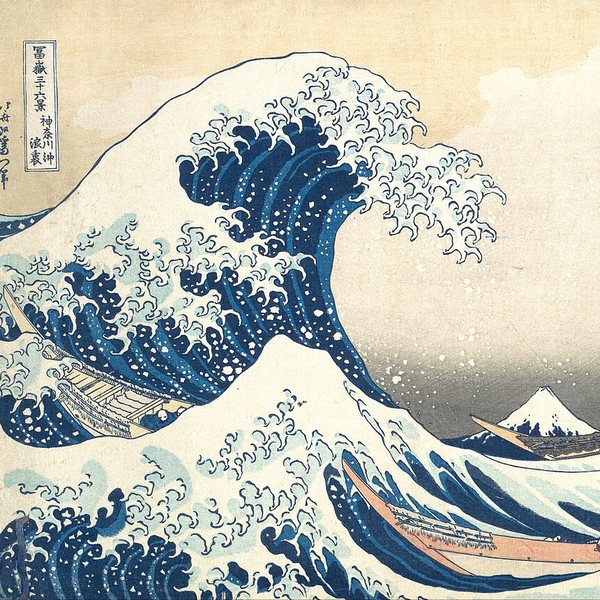
Record: Hokusai's Great Wave at Christie's, 2023. Hiroshige's single-print record is $358,400 (2026).
Top Artelino results for Kawase Hasui's best designs (2023–2025).
The large majority of prints found in homes.
How to check what you have
- Look at the back: In a real woodblock print the colours soak into the paper and show through on the back. A modern offset print shows nothing – and under a magnifier its front shows a regular dot pattern.
- Paper: Traditional prints are on soft, fibrous mulberry paper (kozo). Bright, smooth, perfectly even paper points to a later reproduction.
- Seals: Edo-period prints carry the artist's signature plus publisher's and often censor's or date seals. Their combination helps date an impression.
- Lines and colour: Early impressions have crisp key-block lines and fine colour gradations (bokashi). Worn blocks and flat colours suggest a later printing.
- Size: Compare with the standard formats – most landscape and portrait prints are oban, about 39 × 26 cm (roughly A3).
Artists in this section
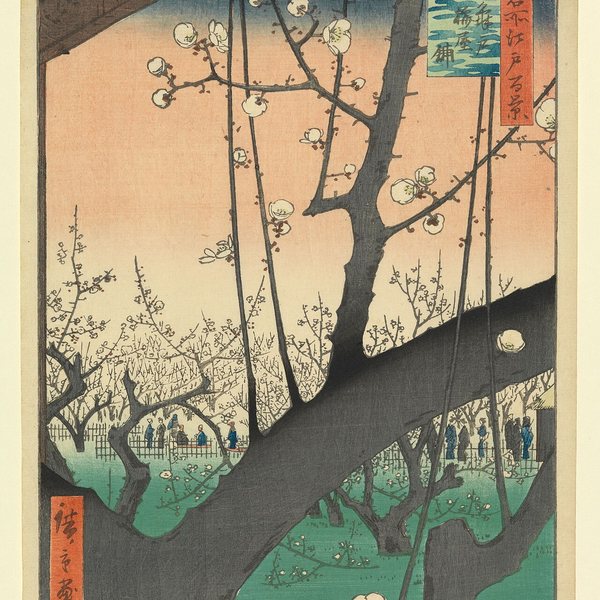 Utagawa Hiroshige
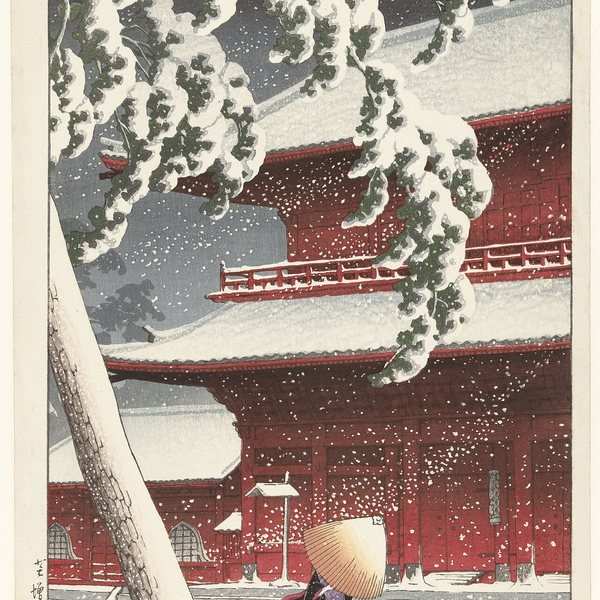 Kawase Hasui
Questions
How do I know if my Japanese print is an original woodblock print?
Look at the back: in a woodblock print the colours show through the paper. Under a magnifier, an offset print shows a regular dot pattern. Then check paper, seals and line quality – or send us photos of front, back and seals.
Are Adachi prints valuable?
Adachi and similar workshops openly make hand-printed reproductions after famous designs. They are beautiful and well made, but they belong to the decorative market, not to the market for original impressions.
What are the seals on my print?
Edo-period prints often carry the artist's signature, a publisher's seal and censor's or date seals. Shin-hanga prints usually have the publisher's seal in the margin. Together they help to date an impression.
Do you own a Japanese print?
Photograph the front, the back and any marks, signatures or seals, and get a free estimate. For insurance, a sale or an estate, order an appraisal with a notarized signature.
Sources
- University of Alabama – Right or wrong? Ukiyo-e reproductions
- Artnet News – A rare version of Hokusai's Great Wave sells for a record $2.8 million
- Apollo – September 2026 auctions: Hiroshige record at Christie's
- Artelino – Hasui Kawase prints: market, auction prices and collector's guide
Images: public domain, via Wikimedia Commons. This page does not offer works for sale.