Section · Architectural drawings and prints
Architectural drawings and prints
Plans, perspectives, etchings of ruins and portfolio plates turn up in estates and archives. Some are worth thousands – many are copies.
Why architectural drawings are special
Architectural drawings were working tools. Offices produced thousands of sheets – sketches, plans, sections, details, presentation perspectives – and most were drawn by assistants, not by the famous architect. At the same time, architects published their work in prints and portfolios, and draughtsmen like Piranesi or Hugh Ferriss made architecture itself the subject of art.
That makes this field rewarding – and tricky. The same building can appear as a signed original drawing, an office drawing, a blueprint, a portfolio plate and a modern reprint, with values ranging from a few dollars to tens of thousands.
What drives the value
- Who drew it: the architect in person, the office, or an unknown hand.
- Which building: famous, built projects and important competitions are worth more.
- Original or copy: drawings far exceed blueprints, reproductions and reprints.
- Quality and size: a finished, attractive presentation drawing beats a technical detail.
- Provenance and condition: office archives, client families and good paper condition add value.
What you may have
- Original drawingPencil, ink, watercolour or charcoal by hand – often by the office rather than the architect.
- Presentation renderingA finished perspective for a client or competition.
- Blueprint or diazo printA copy of a drawing – usually of modest value.
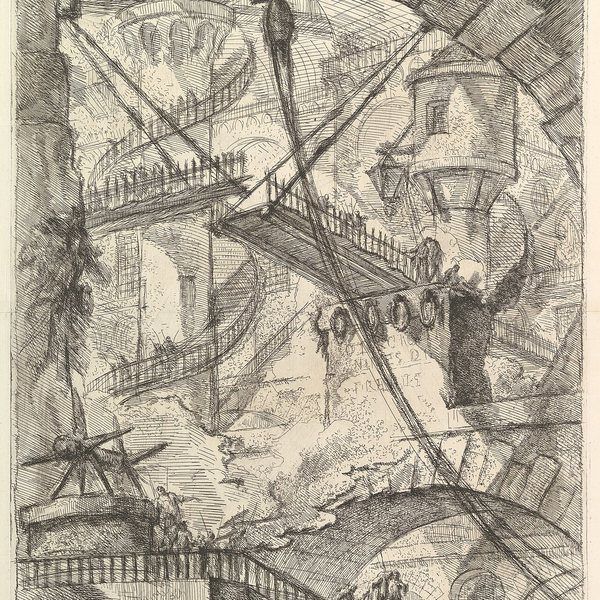
- Etching or engravingPrinted from a plate, e.g. Piranesi's views of Rome.
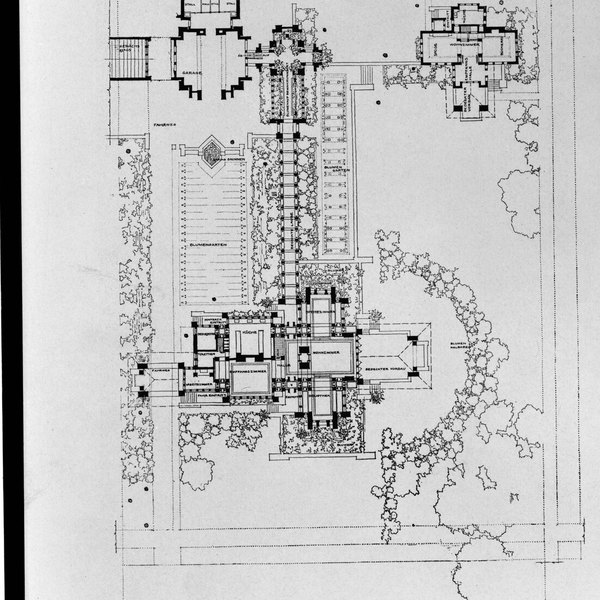
- Portfolio plateA lithograph from a published portfolio, e.g. Wasmuth 1910.
What architectural drawings and prints sell for
Public auction results show the range – not what a specific piece is worth.
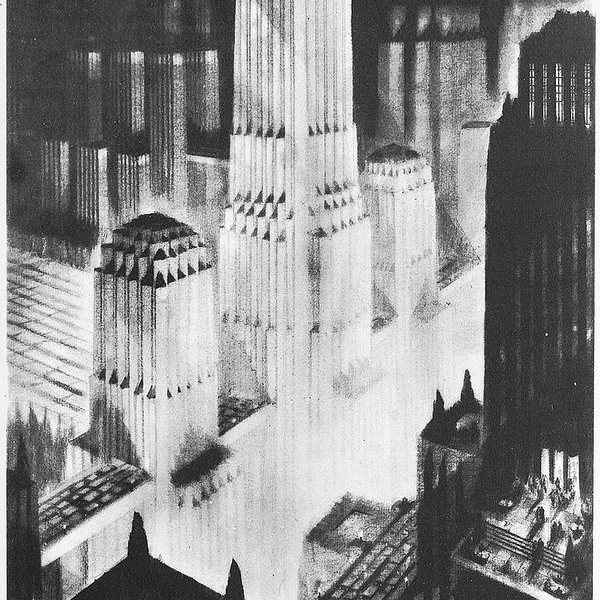
Hugh Ferriss drawing record $21,250; for Wright, decorative objects reached $2.9m.
Single Piranesi views from about €100; a first-state Carceri plate $6,930 (2023).
Original Wasmuth plates; reprints and blueprints usually below.
How to check what you have
- Drawing or print?: An original drawing shows pencil pressure, erasures, corrections and ink that sits on the paper. A print has no such traces; an etching also leaves a plate mark – a pressed rim around the image.
- Blueprint or copy?: Blueprints, diazo prints and photocopies are copies of drawings. They can be of interest for famous buildings, but they are not original drawings.
- Office stamps and signatures: Many drawings were made by assistants. Stamps, title blocks and signatures show which office and which project – and whether the architect signed personally.
- Edition: For etchings and portfolios, find out when the impression was printed: lifetime edition, later edition or modern restrike.
- Provenance: Drawings from an architect's office, a client's family or a documented collection are worth far more than loose sheets without history.
Artists in this section
 Frank Lloyd Wright
 Hugh Ferriss
Questions
Is an old blueprint valuable?
Usually not very, because it is a copy. Blueprints of famous buildings by famous architects can interest collectors – the building and the provenance decide.
How do I know if an architectural drawing is original?
Look for pencil pressure, erasures, corrections and ink lying on the surface. Stamps and title blocks show the office. Printed lines, a dot pattern or a uniform colour point to a copy.
Are Piranesi prints real etchings?
Almost always – but many were printed long after his death from the same copper plates. The date of the impression matters more than the name.
Do you own architectural drawings or prints?
Photograph the front, the back and any marks, signatures or seals, and get a free estimate. For insurance, a sale or an estate, order an appraisal with a notarized signature.
Sources
- Toomey & Co. – Piranesi, L'arco con un ornamento di conchiglia (first state), July 2023
- HAMPEL Fine Art Auctions – Giovanni Battista Piranesi
- Wright Auctions – Plate from the Wasmuth Portfolio, Martin House (2004)
- Toomey & Co. – Wasmuth Portfolio: Buildings, Plans and Designs (1963 edition, 2025)
- Artprice – Hugh Ferriss auction records
- Artprice – Frank Lloyd Wright
Images: public domain, via Wikimedia Commons. This page does not offer works for sale.