Section · Street art
Street art
Street art started on walls – its market lives on canvas and paper. Studio works, editions and certificates decide what a piece is worth.
From the wall to the auction room
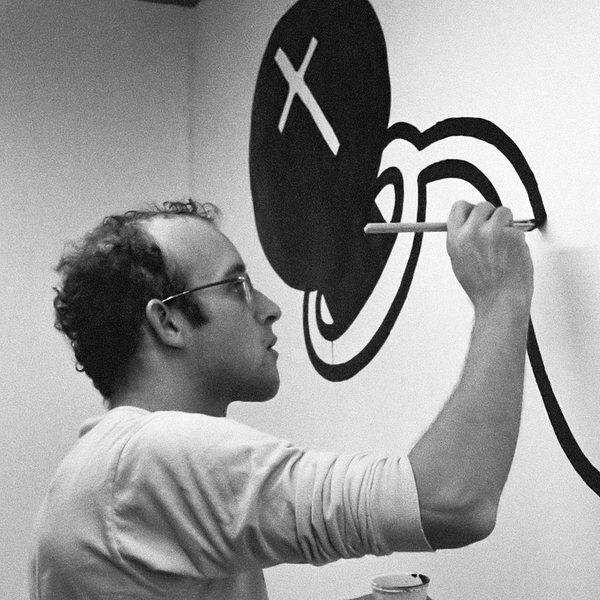
Most street art is made to stay where it is – on walls, shutters, trains and signs. What reaches the market are the works artists make for sale: paintings, works on paper, editioned prints and objects. Keith Haring drew in the New York subway and later sold T-shirts in his Pop Shop; André Saraiva painted Mr. A across Paris and shows paintings in galleries.
The top of the market has become very high. Banksy's Love Is in the Bin – the painting that shredded itself at Sotheby's in 2018 – sold there again in 2021 for £18,582,000, the artist's auction record. Keith Haring's record is £5.0 million.
Certificates matter
Few fields have as many fakes as street art. Some artists therefore authenticate their own work: Banksy's certificates are issued by Pest Control, and a Banksy without one is very hard to sell. For other artists, invoices from galleries, the artist's studio or recognised publishers are the key evidence.
What you may have
- Studio workpainting or work on paper made for sale – the core of the market.
- Screenprintnumbered edition, ideally signed and with a certificate.
- Object or toysculptures and vinyl figures, often in editions.
- Sticker, flyer, postermade in large numbers – usually of modest value.
- Wall fragmentremoved from a building – legally and ethically delicate.
What street art sells for
Public auction results show the range – not what a specific piece is worth.
Banksy, Love Is in the Bin, Sotheby's, 2021; Keith Haring's record is £5.0m.
André Saraiva's record, 2022 – many artists trade in the thousands.
Editions vary widely; stickers and merchandise are usually of modest value.
How to check what you have
- Certificate: Is there a certificate from the artist or the body that authenticates for them (e.g. Pest Control for Banksy)?
- Edition: Screenprints should be numbered, often signed, and match the known edition size.
- Source: Gallery invoices, publisher documents and auction records are the best provenance.
- Studio or street?: Wall pieces and removed fragments raise legal questions; studio works are the legitimate market.
- Too good to be true: An «original» by a famous name at a low price online is almost always a copy.
Artists in this section
 André Saraiva
Questions
Is my Banksy print real?
Only if it comes with a certificate from Pest Control, Banksy's authentication body. Without one, it is almost impossible to sell as genuine.
Are street art prints valuable?
Signed, numbered editions by well-known artists can be. Open editions, posters and stickers are usually worth little.
Can I sell a piece removed from a wall?
It is legally complicated: the wall belongs to the building's owner, and many artists refuse to authenticate removed street pieces.
Do you own street art?
Photograph the front, the back and any marks, signatures or seals, and get a free estimate. For insurance, a sale or an estate, order an appraisal with a notarized signature.
Sources
- MyArtBroker – Banksy's Love Is in the Bin sells for record £18.6m
- Wikipedia – Love Is in the Bin
- MyArtBroker – Keith Haring record prices (GBP)
- Blind Magazine – André Saraiva, graffiti icon, from street art to fashion
- MutualArt – André Saraiva auction results
Images: public domain, via Wikimedia Commons. This page does not offer works for sale.