Section · Photography
Photography
The same negative can produce a print worth millions and one worth a few dollars. What counts is when, by whom and on what the print was made.
One image, many prints
Unlike a painting, a photograph can exist many times. Collectors therefore ask about the print, not just the image. A vintage print made close to the date of the negative is usually worth the most – dealers differ on how close, some allow about ten years. A later print by the photographer, an estate print made after his or her death and a modern reproduction can all show the same picture.
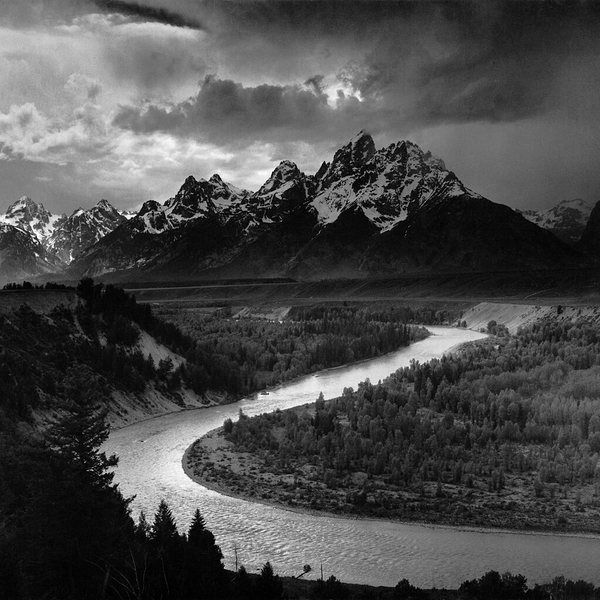
The differences are large. At a 2013 sale of Bruce Davidson's work, vintage prints from East 100th Street sold for up to $20,000, while signed prints made later sold for about $4,000. There are exceptions: Ansel Adams' early prints from the 1920s are worth less than his famous later prints, because the process he used then has not aged well.
Records and the market
The most expensive photograph ever sold at auction is Man Ray's Le Violon d'Ingres (1924), which fetched $12.4 million at Christie's New York in 2022. For eleven years before that, the record was held by Andreas Gursky's Rhein II, sold for $4,338,500 in 2011 – a large contemporary print from an edition.
Most photographs in homes and estates are family pictures, press prints or reproductions. But work by well-known photographers, early processes such as daguerreotypes and albumen prints, and signed prints can be worth a careful look.
Types of print
- Vintage printmade by or for the photographer shortly after the negative was taken – the most valuable.
- Later printprinted years later, by the photographer or under supervision.
- Estate printmade from the negatives after the photographer's death, often stamped by the estate.
- Editiona numbered, usually signed series – common for contemporary photography.
- Reproductiona printed copy in a book, poster or magazine.
What photographs sell for
Public auction results show the range – not what a specific piece is worth.
Record: Man Ray, Le Violon d'Ingres, Christie's New York, 2022.
Andreas Gursky, Rhein II, Christie's, 2011 – record for 11 years.
Bruce Davidson, East 100th Street: vintage up to $20,000, later signed prints about $4,000 (2013).
How to check what you have
- The back: Look for the photographer's stamp, studio or agency stamps, handwritten notes and dates. Press prints often carry captions and archive stamps.
- Paper: Resin-coated (RC) paper came into general use in the 1970s. A print claiming to be from the 1930s should be on fibre-based paper.
- Signature and edition: Contemporary prints are usually signed and numbered on the back or on a label; check the edition size.
- Process: Daguerreotypes, albumen prints, gelatin silver prints, C-prints and pigment prints each have their own look – and their own market.
- Printed or photographic?: Under a magnifier, a reproduction in a book or poster shows a dot pattern; a photographic print shows continuous tone.
Questions
What is a vintage print?
A print made by or for the photographer close to the time the negative was taken. It is usually the most valuable version of an image.
Are signed photographs valuable?
A signature helps, but the date of the print, the photographer and the image matter more. A signed later print is usually worth less than a vintage print.
What is the most expensive photograph ever sold?
Man Ray's Le Violon d'Ingres (1924), sold for $12.4 million at Christie's New York in 2022.
Do you own photographs by a known photographer?
Photograph the front, the back and any marks, signatures or seals, and get a free estimate. For insurance, a sale or an estate, order an appraisal with a notarized signature.
Sources
- Artnet News – Man Ray print becomes the most expensive photograph sold at auction
- Guinness World Records – Most expensive photograph sold at auction (Rhein II, 2011)
- What Will You Remember – Vintage print valuation
- Harold Feinstein Archive – Vintage, printed later and modern prints: what's the difference?
Images: public domain, via Wikimedia Commons. This page does not offer works for sale.