Section · Animation art
Animation art and Hanna-Barbera
Before digital animation, every frame was painted by hand on clear celluloid. Those cels, and the drawings behind them, are now collected – from Flintstones to Scooby-Doo.
From the studio to the collector
For decades, animated films were made on celluloid: animators drew each movement on paper, and the drawings were traced and painted onto transparent cels, which were photographed over a painted background. Hanna-Barbera, founded in 1957 by William Hanna and Joseph Barbera, produced these on an industrial scale – The Flintstones (1960), The Jetsons (1962), Scooby-Doo, Where Are You! (1969) and many more. When the industry moved to digital ink and paint in the 1990s, the era of hand-painted cels ended.
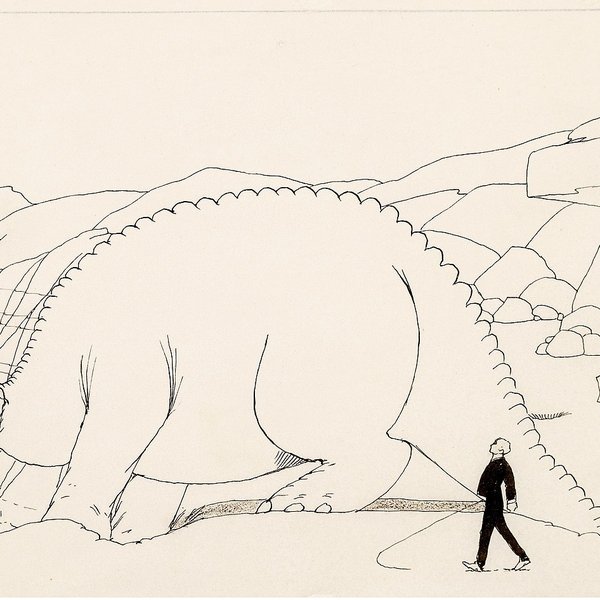
The very idea goes back further: Winsor McCay drew thousands of sheets by hand for Gertie the Dinosaur in 1914 – one of those drawings illustrates this page.
What drives the value
- Production or collector piece: cels used in production are worth far more than sericels and later limited editions.
- Character and scene: main characters, full-figure poses and recognisable scenes are most sought after; several characters together even more.
- With background: a cel on its original matching background is rare and valuable; many cels are shown on copies.
- Condition: cracking or lifting paint and yellowed celluloid reduce value.
What you may have
- Production celhand-painted cel actually used to film the cartoon – the real thing.
- Production drawingpencil animation drawing from which the cel was made.
- Limited edition celhand-painted later for collectors, in a numbered edition.
- Sericela screenprinted cel for sale – decorative, often with a seal or certificate.
- Backgroundpainted scenery; original backgrounds are rare, copies common.
What animation art sells for
Public auction results show the range – not what a specific piece is worth.
Scooby-Doo, Where Are You! full-cast production cel, 1969, Heritage – a record for the studio.
Signed pieces and main characters sell well above ordinary cels.
Example: a 1980s Scooby-Doo model cel, $125 at RR Auction.
How to check what you have
- Hand-painted or printed?: Look at the paint from the back: production cels show hand-applied paint with slight unevenness. Sericels are flat and uniform.
- Seal and certificate: Sericels and limited editions usually carry a studio seal or certificate – which tells you it is not a production cel.
- Background: Check whether the background is an original painting or a photographic or colour-copy reproduction.
- Condition: Paint loss, cracks and warping are common in old cels; store them flat and away from light and heat.
- Provenance: Studio art stores, auction records and documentation from former studio staff help.
Questions
What is a production cel?
A hand-painted cel that was actually used to film an animated cartoon. It is the most valuable kind of cel.
What is a sericel?
A screenprinted cel produced for sale to collectors. Sericels are decorative and usually worth much less than production cels.
Are Hanna-Barbera cels valuable?
Good production cels of main characters sell for hundreds to thousands of dollars; the record for the studio is $26,400 for a Scooby-Doo full-cast cel from 1969.
Do you own animation cels or drawings?
Photograph the front, the back and any marks, signatures or seals, and get a free estimate. For insurance, a sale or an estate, order an appraisal with a notarized signature.
Sources
- Heritage Auctions – $1.96 million animation auction (Scooby-Doo cel record)
- RR Auction – Scooby-Doo model cel from a Hanna-Barbera production
- Animation Scoop – Heritage hosts «Yabba Dabba Doo! The Art of Hanna-Barbera II»
Images: public domain, via Wikimedia Commons. This page does not offer works for sale.